
Computing at Nancledra School equips pupils with the knowledge, skills, and confidence they need to thrive in an increasingly digital world. Our curriculum is designed to ensure that all pupils:
- understand and apply the fundamental principles of computer science, including abstraction, logic, algorithms, and data representation
- analyse problems in computational terms, gaining repeated practical experience of writing and debugging programs
- evaluate and apply information technology—including new or unfamiliar tools—to solve problems effectively
- become responsible, competent, confident, and creative users of information and communication technology
We want children to see computing as a way of thinking, creating, and solving real‑world challenges.
Our Approach: Teach Computing Curriculum
At Nancledra, we follow the Teach Computing Curriculum, a high‑quality, research‑informed programme developed by the National Centre for Computing Education. This curriculum provides a clear, carefully sequenced progression from Early Years to Year 6, ensuring that pupils build secure knowledge across the three strands of computing:
- Computer Science – understanding how computers work, writing algorithms, programming, and debugging
- Information Technology – using software purposefully to create, organise, store, and present digital content
- Digital Literacy – using technology safely, respectfully, and responsibly
The Teach Computing Curriculum ensures that learning is practical, engaging, and accessible for all pupils. Concepts are revisited regularly so that children deepen their understanding and apply their skills with increasing independence.
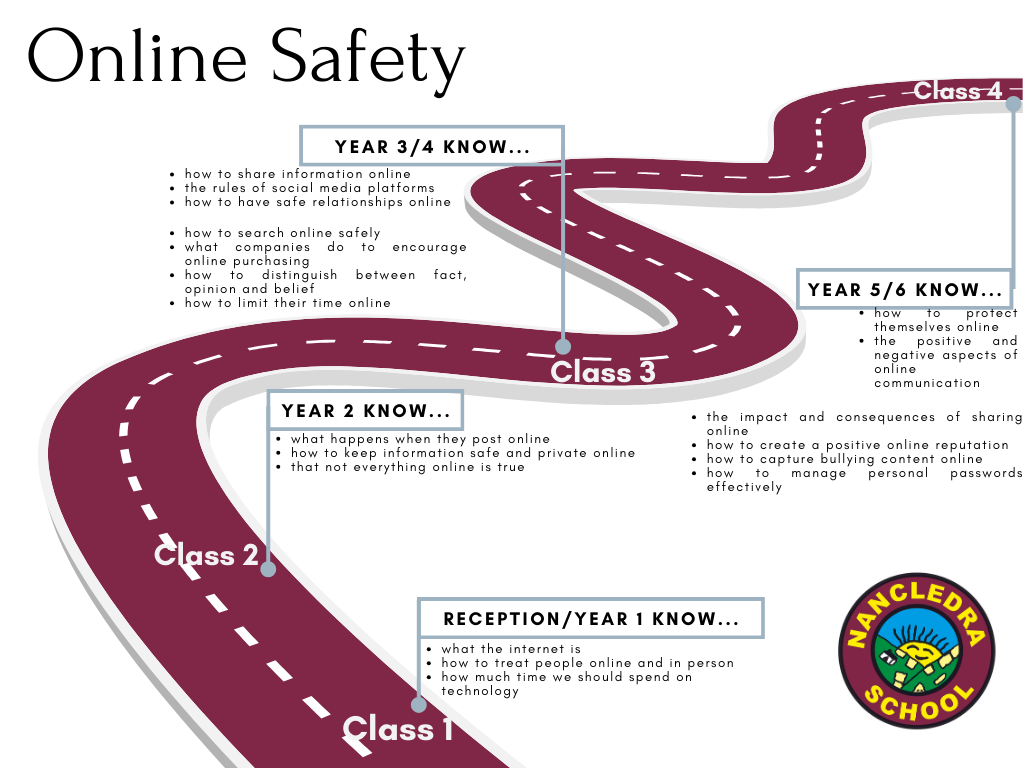
Online Safety
Online Safety is a core priority at Nancledra School. We want every child to become a safe, respectful, and responsible digital citizen.
To support this, we use high‑quality resources from Common Sense Education, a trusted programme that provides age‑appropriate lessons on:
- staying safe online
- recognising risks and making responsible choices
- protecting personal information
- understanding digital footprints
- communicating respectfully
- identifying misinformation
- knowing what to do if something online causes worry or concern
Each academic year begins with a whole‑school Online Safety focus, followed by dedicated lessons every half term to ensure that children revisit and strengthen their understanding throughout the year.